


Rough Openings | Standard Framing Dimensions

Framing Rough Openings
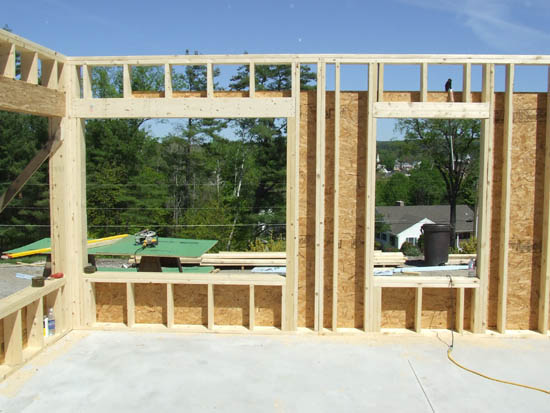
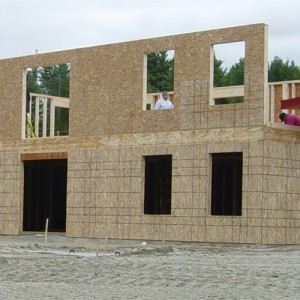 Framing rough openings for windows and doors (standard door and windows openings) is really straight forward if you follow some simple dimensional rules. For standard wood framed construction the rough openings for doors and windows is typically the actual unit size plus 2-1/2 inches in height and width.
Standard Door Rough Openings
If you’re going to frame a rough opening for a door then you’ll need to know the unit size. For example, let’s say we want to frame a 6/8 x 3/0 front entry door. The 6/8 stands for 6′-8″ tall and the 3/0 stands for 3′-0″ wide. Therefore the rough opening would be 82-1/2″ tall by 38-1/2″ wide.
82-1/2 inches also happens to be the standard “header height” for windows and doors. If you’re a novice framer then this is the height of the BOTTOM of the window and door headers. This is also the top of the jack studs. Which means the jack studs are 81 inches long (typically).











This site is very helpful for those of us who don’t do this every day. Thank you for making it available.
Brooks – Thanks for the compliment. I hope you come back often for more advice and information.
Thank you Todd!
The simple way of explaining without long descriptions is appreciated. Anybody can understand easily. Very useful.
Wimal Lokuliyana
plz enter the standard size of door and window.
If i am building an addition when i stand my wall up it is 1 inch higher than the old wall can i make the cornish even by making my new rafters with a longer overhang,
You’ll have to make a deeper bird’s mouth and really focus on the roof geometry.
Your web site says window rough opening should be 2 1/2″ over actual. The flange on window is not that large, so i respectfully suggest your info is wrong. !/2 ” to 3/4 is what I use. Did I miss something, Thanks, Rick
Rick,
Here’s what the article says:
“Window rough openings are framed in a similar way to door openings. Again I like to use examples so let’s say we’ve got a 3′ wide by 4′ tall window unit then the rough opening would be 38-1/2″ wide and 50-1/2″ tall. Now, most window manufactures actually specify a standard rough opening which is typically a bit tighter so it’s best to follow the manufacturers recommendations when possible.”
As I noted, some manufacturers use a tighter dimension. 2-1/2 inches is the industry standard, many window manufacturers adjust after framing. Framing usually happens, then windows are ordered based on rough-openings.
I think what he was meaning by 2 1/2″ wider than the windows was 2 1/2″ larger than the actual window pane itself. Just like a door, a 3’0″ door is only 36″, but once you add the jamb thickness and the space between the door and jamb, you actually have more like 37 3/4″. Same goes with windows, if you want an actual window pane, let’s just say 24″ wide, then once you allow for the frame, and insulation, you would end up being 2 1/2″ over. Just how I understood, I hope I didn’t confuse the topic more than it was. ?
will the rough opening for a double door still be the nominal dimensions + 2.5 inches in both height and width?
Yes sir :) However, if you have certain special doors that number might change, some outswing French doors and some Andersen units are different so check the spec with the door.
We are building a small workshop with just a plain concrete floor. With no subfloor going in, and thus no finish flooring, what is the measurement to use on this type of door application for roughing in?
Troy – Typically we’ll make that rough opening another 3″ wide so we can attach a pressure treated buck in the opening so there’s something to shim/attach the door framing. Good luck.
Good Day Todd
Your site has been very helpful, and I plan to visit it more in the future.
Question: when framing a rough opening for a man door for a shop, do I still require the bottom plate or do I make my measurement minus the bottom plate.
The height is from the floor surface to the bottom of header. Depending on the number of plates you’ll need to consider that.
would like to install a standard size exterior door on a wall that is 84″ to the bottom of the ceiling studs. The 2 2×4’s in the ceiling. Is there enough space?
Cheryl,
It really depends on if that’s a bearing wall, and if so, how much structural support is required above the door. 84″ is only 1-1/2″ above the top of the rough opening for a 6’8″ door. That basically doesn’t leave any room for a structural header.
Helped me refresh my memory. Thank you very much.
We are building a greenhouse and bought old windows and doors. We are considering installing the windows and doors without jambs since they did not come with them and we can use the 2×4 framing to screw the hinges into. Does the 2-1/2″ include the jamb? If I don’t have a jamb? Should I just go with 1/2″ wider and longer when framing?
Great question! 1/2″ will likely work well with no jambs. You’ll need to install jamb stops but that clearance will probably work pretty good. Certainly no smaller, and up to 3/4″ would be better. Good luck.
In installed some M&W windows many years ago. Most were 3/0 X 4/6. I framed a 38 X 58 rough opening. Windows fit fine. But the newer windows with an attachment flange don’t seem to need the extra two inches of height in the opening. Is that correct?
We still frame that way today. The extra opening definitely helps ensure that all the windows can be properly plumbed and leveled.
my son bought a brick home built in the 50’s and needs to replace windows. I measured the outside of the window box at 36 5/8 x 55 3/4, 30 3/4 x 47 1/4 and the last 54 x 52 3/4 can these be replaced with any standard window or does he have to buy special. All the measurements were with the molding removed and to the outside of the window box frame. Thank you
Most vinyl window companies that I work with make each window to order, so there’s really not a “special” order. We just give them the dimensions and they make what we need.
I have a window that is 34×60.5 what will the rugh opening be? will I add 2.5 o the height and width?
36 1/2 by 63
I am going to put up a steel building for a garage and living quarters. If I want to use wood doors, how would that normally be done on a steel (commercial type) building? No carpet, no tile. Also I will be using several 3/0, 8/0 solid windows. Does that pose a problem. The building mfg says they can make the openings any size, but I am wondering about mounting. Thanks, David
Not an issue, you’ll want to have the rough openings made a bit larger so you can install a wood “buck” which is wood framing attached to the steel, so you can install the windows to the wood framing.
just trying to replace a middle frame on an interior door. don’t want to buy in bulk.
If there’s a window rough opening in a wall plate can it be sealed or covered if we don’t want a window there?
absolutely.
I am trying to accommodate furniture, some of which is 42″high. I am trying to maximize window height and am assuming 36+ will accommodate that height with a slight reveal between the furniture and the sill.
Do you have any advise>
Hi I am about to build a camp. why is it necessary to use birds mouths. I could use t30 structural screw. I have an engineering background and know the X portion of compression will be off set by tension… but old school carpenters give a bad look with this idea.
I also think this info is misleading. I quickly googled rough in gap and this article popped up first. Unfortunately I’m now a full 2 inches larger RO than my window requires.
Derek
Well that depends, are you installing new windows with frames or replacement windows, there is a HUGE difference. These RO’s are standard for new construction here in the Northeast.
When enclosing an open porch with windows and doors, can the framing be 3″ between door and windows? We would want it to look like sunroom?
Thanks
Ron
not sure I understand the question. For a screen porch it depends on the type of door you’ll be using.
For a 3-0x6-8 door shouldn’t the header height be 81-1/4 AFF?
This allows for the door opening (80″), + jamb (3/4″), and
clearance (1/2″) It seems 82-1/2″ would be too tall to allow
fastening of the top door trim.
Bill….thousands of homes built in this area with 82-1/2″….never too tall with ONE exception….outswing french doors…those are shorter.
I have a question in your statement, “82-1/2 inches also happens to be the standard “header height” for windows and doors. If you’re a novice framer then this is the height of the BOTTOM of the window and door headers. This is also the top of the jack studs. Which means the jack studs are 81 inches long (typically).”
If 82-1/2 inches is the bottom of the header, and 81 inches is the height of the Jack stud, why is there a difference of 1-1/2 inches. I’m confused.
Because there is a bottom plate that is 1-1/2″ thick, add the jack stud and you’ll be at 82-1/2″ :)
I’ve got a R/O of 36×50. What will my actual window size be?
Hard saying actually..there is no standard. Each manufacturer does it a bit different, but they all typically fit into a RO.
Hi Todd, I’m putting in a couple of large (144” wide x 72” tall) casement Windows in a new room. The roof is pretty high up (11’). How large a beam do I need to use for the upper frame and lower frame ? I guess the upper beam will be holding a lot of the weight of everything above and so should be bog enough to not transfer any weight down on the window frame. Is a 2”x6” beam sufficient to frame it ? All around ?
Sam – 2×6 is not sufficient anywhere. The size will depend on the loading, where you live, local codes. But a 12′ wide window will need a very deep header.
If the rough opening height is 82 inches, is there any possible way to make an 82-inch tall door and frame work? If not, can I cut the bottom 2 inches off the header?
Not everyone knows door terminology so it needs to be clear that standard sizes of doors are typically based off the slab or panel size and does not include the frame components. The “door” or “unit” size is what you need to understand to create the rough opening. The adding of the 2 1/2″ number being referenced is based off the slab or panel size plus the frame components. If you have a special frame that is thicker than most standard door frames you would need to adjust your rough opening.
Installing a pre-hung bay window with the following dimensions: interior height from top of board to bottom of board is 33 1/2, exterior height is 35 on side facing inside house, 36 1/4″ height on side facing out. Width is 60″ on the side facing inside, 61 1/2″ on the side facing outside. Installing where there was no window before. What should my rough opening be? Confused with different measurements front to back.
Thinkin the rough opening figures are bfore the jack studs are installed??
yes
Sorry but I’ve been framing for 25 years and my windows are framed to the exact size of window. A 3’0 x 4’0 should be framed at 36” wide and height is 48” because the windows are exactly a 1/2” smaller than the actual size.. maybe I’m confused with your answer? But that’s how we’ve always done it